
Two line items. Hundreds of dollars. And most people have no idea what they’re actually paying for.
A few months ago I was helping a friend shop for a new insurance quote. She owns a 2013 Honda Civic — solid car, runs fine, worth maybe $7,000 on a good day. She’d been paying for comprehensive and collision for years without ever questioning it, because that’s what she’d always done.
When we actually sat down and ran the numbers, she was paying $960 a year for those two coverages combined on a car that was depreciating by about $800 annually. A total loss claim after her deductible would net her maybe $6,000. She’d been sending nearly a thousand dollars a year to protect a $7,000 asset, on a car she owned outright.
Was that wrong? Maybe not entirely — she lives in a city with real theft risk and she doesn’t have a huge emergency fund. But she’d never actually thought it through. She was just paying on autopilot.
That’s the situation most people are in with these two coverages. So let’s actually think it through.
Collision Coverage: What It Does and Doesn’t Do
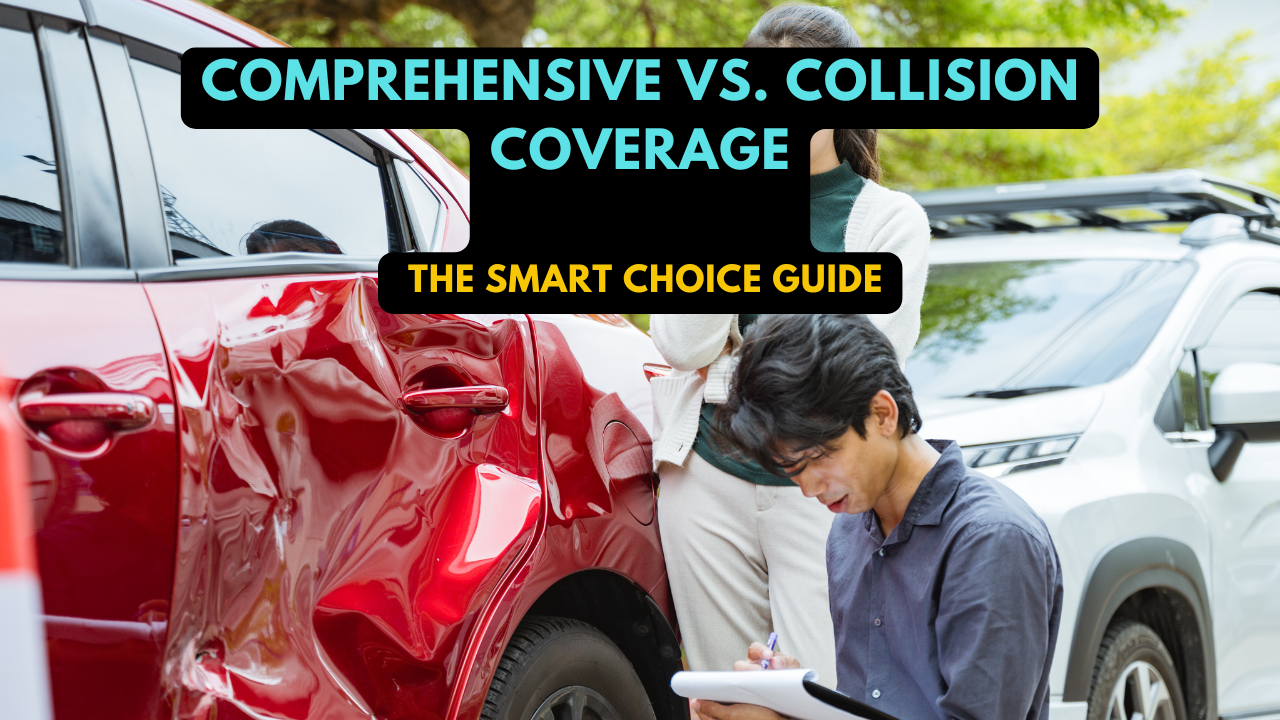
Collision coverage pays to repair or replace your vehicle when it’s damaged in — as the name suggests — a collision. You hit another car. You back into a concrete pillar in a parking garage. You slide off an icy road into a guardrail. Your car gets hit by another moving vehicle while it’s parked on the street.
The important detail: it doesn’t matter who was at fault. Even if you caused the accident, collision coverage steps in to cover your vehicle’s repair costs — minus your deductible.
What collision covers:
- Hitting another vehicle (the damage to your car, not theirs)
- Hitting a stationary object — fence, guardrail, mailbox, that parking barrier you misjudged
- Single-car accidents like skidding off the road
- Your parked car getting hit by another moving vehicle
What collision does NOT cover:
- Damage to the other driver’s car — that’s your liability coverage
- Theft, vandalism, weather damage, or animal strikes
- Fire damage or anything that happens to your car that isn’t a collision
Comprehensive Coverage: Misleadingly Named, Actually Useful
“Comprehensive” is one of the more confusing terms in insurance, because it sounds like it covers everything. It doesn’t. Insurance professionals sometimes call it “other than collision” coverage, which is more accurate — it covers the wide range of things that can damage or destroy your car that have nothing to do with you hitting something.
What comprehensive covers:
- Theft — someone taking your entire car
- Vandalism and keying
- Hail, flooding, and storm damage
- Fire
- Fallen trees and debris
- Animal strikes — hitting a deer falls here, not under collision
- Glass damage, including windshield cracks (often with no deductible, depending on your state)
What comprehensive does NOT cover:
- Collisions with other vehicles or objects
- Normal wear and tear
- Mechanical failure
The Easiest Way to Remember the Difference
Here’s the mental shortcut that actually sticks:
Collision = your car hits something, or something moving hits your car.
Comprehensive = something happens TO your car while it’s just sitting there — weather, theft, an animal, someone’s bad intentions.
There’s one genuinely confusing edge case worth knowing: if you hit a deer, that’s comprehensive, not collision. The logic is that the deer struck your car, not the other way around. But if you swerve to avoid the deer and hit a tree? That’s collision — your car struck the tree.
It’s a little absurd, but it matters when you’re filing a claim, because the deductibles are often different.
How Deductibles Work (and Why They Matter More Than People Think)
Both coverages come with their own separate deductibles — the amount you absorb before your insurer pays anything. Typical options run from $250 to $2,000. Higher deductible means lower monthly premium, but more out of pocket when something actually happens.
Most drivers set comprehensive deductibles lower than collision deductibles — something like $100 to $500 for comprehensive and $500 to $1,000 for collision. This makes sense because comprehensive claims (cracked windshield, minor hail damage) tend to happen more often and involve smaller amounts. You’re more likely to use it, so you want a lower bar.
Here’s the calculation that trips people up: if your car is worth $5,000 and your collision deductible is $1,000, the most your insurer will ever pay out is $4,000 — and that’s assuming the car is a total loss with no depreciation adjustment, which almost never happens cleanly. On an older car, you need to honestly ask whether the annual premium justifies that ceiling.
What These Coverages Actually Cost
Nationally in 2026, collision coverage averages around $740 per year. Comprehensive runs about $290. Together, they add roughly $1,030 annually — or just over $85 a month — on top of your base liability premium. That number moves a lot based on your specific situation.
The biggest variables:
- Your car’s value. A newer, more expensive car costs more to insure because the potential payout is higher.
- Where you live. Urban areas with higher theft rates push comprehensive premiums up. States prone to severe weather do the same.
- Your driving history. At-fault accidents raise collision rates substantially and stick around for three to five years.
- Your deductible. A $1,000 deductible on collision can cost 30 to 40 percent less than a $250 deductible. That’s a meaningful gap in annual premium.
The Question Nobody Bothers to Ask: What Is Your Car Actually Worth?
This is where most people go wrong — including my friend with the Civic. They keep paying for comprehensive and collision on a vehicle whose value has dropped to the point where the coverage barely makes financial sense.
The rule of thumb the industry uses: if your combined annual premium for both coverages exceeds 10% of your car’s current market value, you should seriously question whether you need them.
Put real numbers to that. Say your car’s current market value is $6,000. Ten percent is $600. If you’re paying $900 a year for comprehensive and collision combined with a $500 deductible, the maximum realistic payout after a total loss is $5,500 — and you’re sending $900 a year for that protection. A few years of premiums and you’ve paid more than the car is worth.
Look up your car’s current value at Kelley Blue Book or Edmunds right now — not what you paid for it, not what you think it’s worth, but what it would actually sell for today. People are often genuinely surprised by how much their car has depreciated since they bought it.
When You Don’t Actually Have a Choice
Before we get to the decision framework, there’s one situation where this whole analysis is moot:
If you’re still making payments on your car, your lender almost certainly requires you to carry both comprehensive and collision. They have a financial stake in the vehicle and they’re protecting it. Same deal with leases — the leasing company requires both coverages, usually with lower deductibles ($500 or less) to protect their asset.
Once the loan is paid off or the lease ends, the choice becomes entirely yours. That moment — the final payment — is a good time to sit down and actually run the numbers.
The Decision Framework: Working Through Your Specific Situation
Work through these six questions in order. Your answers will point you toward a clear answer.
1. Is your car financed or leased?
If yes — you need both. No further analysis required until the lender or lessor is out of the picture.
2. What is your car actually worth right now?
Look it up. Don’t estimate. Under $4,000 and the math almost never supports paying for collision. Comprehensive still makes sense even on cheaper cars because it covers theft and total loss events you can’t control.
3. Do you have savings to cover a repair or replacement?
If you have a solid emergency fund and could absorb a $5,000 to $10,000 hit without financial crisis, you have real flexibility to drop collision and self-insure. If losing your car would derail your life, keep collision regardless of the car’s value — the peace of mind has real worth.
4. Where do you park and drive?
Urban streets with high theft rates make comprehensive genuinely earn its keep. Tight city parking with lots of door ding exposure makes collision more relevant. Rural driving in low-crime areas with open space tilts the math differently. Think honestly about your actual environment.
5. How much do you drive?
Low-mileage drivers face statistically lower collision risk. If you’re driving fewer than 5,000 miles a year, your exposure is limited — and the collision premium is harder to justify on an older car.
6. What’s your deductible relative to your car’s value?
If your collision deductible is $1,500 and your car is worth $4,000, a total loss claim nets you $2,500 before depreciation adjustments. That gap can make the annual premium feel genuinely absurd when you put it on paper.
Also read:
How to Choose Right Life Insurance Policy for Your Family
If You’re Cutting Back: Which One Goes First?
If the numbers are telling you to trim something, the general rule is: drop collision first, keep comprehensive.
Collision is the more expensive coverage and only pays out in situations where your car gets damaged in an accident — situations that involve some element of driving behavior and risk you can influence. Comprehensive covers theft and weather events — things entirely outside your control, events that happen to your car regardless of how carefully you drive.
Comprehensive also costs less than half of what collision costs. If you’re going to keep one, keep the cheaper one that covers the risks you can’t prevent.
Exception to this logic: if you live in a low-crime, low-weather-risk area and you’re a careful driver with a clean record and genuine savings behind you, you might reasonably calculate that comprehensive isn’t pulling its weight either. But this only makes sense if you can truly absorb a total loss without it upending your finances.
Four Real-World Scenarios to Make This Concrete
Scenario 1: The aging sedan you own outright.
Your 2015 sedan is worth $7,500. Both coverages cost you $950 a year combined. The car depreciates another $1,000 annually. In three years, it might be worth $4,500 while you’ve paid $2,850 in premiums. This is exactly the zone where dropping collision starts making sense — especially with a decent emergency fund behind you.
Scenario 2: The brand-new financed SUV.
Your lender requires both. Pay both. The car is worth $35,000 and both coverages are protecting a real asset. The math is clearly in your favor here — no further analysis needed.
Scenario 3: The older pickup in a high-theft city.
Your 2010 pickup is worth $5,000 and you park on city streets. Drop collision — you eliminate the expensive coverage — but keep comprehensive. You’re maintaining protection against the realistic, specific risk of theft in your environment while cutting the premium that’s harder to justify.
Scenario 4: The careful driver with savings.
You have a $20,000 emergency fund, a clean record, and an older car. You can genuinely self-insure collision. Keep comprehensive for peace of mind on theft and weather. Drop collision and put the savings somewhere that earns you something.
A Quick Word on Gap Insurance
If you financed a new car and it gets totaled shortly after purchase, you might owe more on the loan than the car is actually worth — because new vehicles depreciate sharply in the first year or two.
Gap insurance covers the difference between your car’s actual cash value and your remaining loan balance. Dealers and lenders typically offer it as a one-time fee of $200 to $400, or it can be added to your auto policy more cheaply than the dealer version. If you put less than 20% down or financed over a long term, this deserves a look alongside the comprehensive and collision decision.
Quick Reference: What to Do in Your Situation
Here’s the short version for when you just need a fast answer:
| Your Situation | Recommendation |
| Financed or leased vehicle | Keep both — required |
| New car you own outright | Keep both |
| Car worth $15,000–$25,000, no loan | Keep both |
| Car worth $8,000–$15,000, no loan | Evaluate based on your savings |
| Car worth under $5,000, no loan | Consider dropping collision |
| Car worth under $3,000 | Strong case to drop both |
| No emergency fund / tight budget | Keep both regardless of car value |
| Solid savings, older car | Safe to drop collision first |
The Bottom Line
Comprehensive and collision are not one-size-fits-all products. They serve genuinely different purposes, cost very different amounts, and make different degrees of financial sense depending on your vehicle’s value, your financial situation, and where you actually live and park.
The biggest mistake people make is the one my friend was making — paying for collision on a vehicle that’s worth less than two or three years of premium payments, on autopilot, because they’ve always done it. The second biggest mistake is dropping everything impulsively and leaving yourself exposed to theft or a hailstorm that totals a car they genuinely can’t afford to replace.
The fix is simple: look up your car’s current value today — not what you remember paying for it. Calculate what you’re paying annually. Run the 10% rule. Ask yourself honestly whether your emergency fund can absorb a loss.
Then make a decision based on your actual numbers. Not fear, not habit, not because it’s easier to leave things alone.
Five minutes of honest math can tell you whether you’re over-insured, under-insured, or exactly where you should be.
This article is for informational purposes only and does not constitute insurance advice. Coverage costs and requirements vary by state, insurer, vehicle, and individual profile. Always consult a licensed insurance agent before making changes to your policy.