
⚠️ Disclaimer: This article is for informational purposes only and does not constitute financial advice. Always consult a qualified financial professional before making financial decisions.
A beginner's guide to one of the most confusing words in the home buying process — explained simply
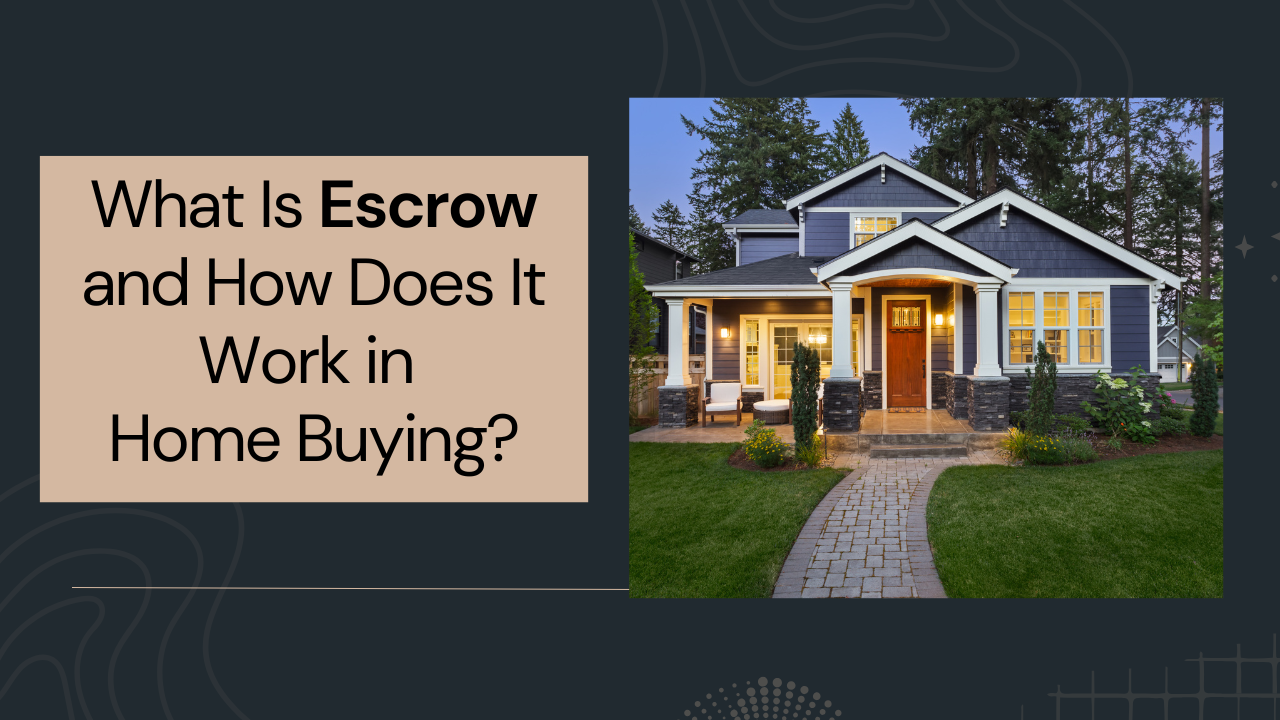
Escrow
You are in the middle of buying your first home.Things are moving fast. You are signing documents, transferring money, and hearing words you have never heard before.
Then someone says "we will put that in escrow" or "your escrow account will handle that."
You smile and nod — but inside you have no idea what they are talking about.
This guide explains escrow from the very beginning. What it is, how it works, why it exists, and what it means for you as a homebuyer. No confusing language. No assumptions about what you already know.
What Is Escrow?
Escrow is when a neutral third party holds money or important documents on behalf of two people — until both sides have done what they agreed to do.That is the whole idea.
In home buying, escrow protects both the buyer and the seller during the transaction. Neither side fully trusts the other yet — and that is completely normal. You do not know the seller personally. The seller does not know you. A lot of money is changing hands.
So instead of the buyer handing cash directly to the seller on day one — and hoping everything works out — both sides use a neutral middleman. That middleman holds everything safely until all the conditions of the sale are met. Then, and only then, does the money get released and ownership transfer.
Think of escrow like this: Imagine you agree to swap something valuable with a stranger online. Instead of sending your item first and hoping they send theirs back, you both give your items to a trusted friend. The friend holds both until they confirm both sides have delivered. Then the swap happens. That trusted friend is essentially playing the role of an escrow.
Why Does Escrow Exist?
Escrow exists because buying a home involves a lot of money, a lot of paperwork, and a lot of steps — and things can go wrong at any stage.Here is a simple example of why it matters.
Imagine you pay the seller the full purchase price on day one. Then you discover the home has serious structural damage that was hidden. Or the seller's title to the property turns out to be disputed. Or the seller simply changes their mind and disappears with your money.
Without escrow, you would have very little protection.
Escrow solves this by making sure:
- The buyer's money is safe and held securely until the deal is complete
- The seller knows the buyer actually has the funds before handing over the keys
- All conditions of the sale — inspections, repairs, approvals — are met before anyone gets paid
- Both sides are protected if something goes wrong before closing
The Two Types of Escrow in Home Buying
Here is something that confuses a lot of first-time buyers. The word "escrow" is actually used in two different ways during the home buying process.Type 1 — Escrow During the Home Purchase (Buying Escrow)
This is the temporary escrow account that is opened when you make an offer on a home and it is accepted. It holds your deposit — called earnest money — along with other funds and documents, until the sale is completed at closing. This type of escrow starts when your offer is accepted and ends on the day you close on the home.Type 2 — Escrow After Closing (Ongoing Escrow Account)
This is the long-term escrow account that your mortgage lender sets up after you buy the home. It holds a portion of your monthly mortgage payment to cover property taxes and home insurance on your behalf. This type of escrow continues for as long as you have a mortgage — often many years. Both are called "escrow" but they serve different purposes at different stages. We will cover both in detail below.How Does Escrow Work When Buying a Home? (Step by Step)
Let us walk through the entire buying escrow process from start to finish.Step 1 — Your Offer Is Accepted
You find a home you love. You make an offer. The seller accepts it. You are now under contract — which means both sides have agreed to the terms of the sale in writing. At this point, an escrow account is opened. This is usually handled by a neutral third party called an escrow company, a title company, or sometimes a solicitor depending on where you live.Step 2 — You Pay Your Earnest Money Deposit
Within a few days of your offer being accepted, you are required to pay a deposit — called earnest money. This is typically 1% to 3% of the purchase price, though it varies.This money goes into the escrow account — not directly to the seller.
Earnest money shows the seller you are serious. It tells them you are not just making offers on every house in the neighbourhood with no intention of following through.
If the sale goes ahead, your earnest money is applied toward your down payment or closing costs. If the sale falls through for reasons covered in your contract — such as a failed inspection — you usually get it back. If you walk away for reasons not covered in the contract, you may lose it.
Step 3 — Inspections, Appraisals, and Conditions Are Met
While your money sits safely in escrow, both sides get busy fulfilling the conditions of the sale.As the buyer, you will typically arrange:
- A home inspection — a professional examines the property for any issues
- A property appraisal — your lender sends someone to confirm the home is worth what you are paying
- A title search — a check to confirm the seller legally owns the property and there are no disputes or outstanding debts attached to it
Step 4 — Final Approval and Closing Preparation
Once inspections are done, your mortgage is fully approved, and all conditions are satisfied, both sides prepare for closing.You will receive a closing disclosure — a document that lists all the final costs, fees, and figures involved in the transaction. Review this carefully. It tells you exactly how much money you need to bring to closing.
Step 5 — Closing Day
This is the big day. You sign a large stack of documents — transferring ownership from the seller to you.The funds held in escrow — your earnest money, your down payment, your mortgage loan amount — are all released to the seller and to the various parties who are owed fees (solicitors, agents, title companies, and so on).
The seller receives their money. You receive the keys. The escrow account for the purchase is closed. You are now a homeowner.
What Happens to Escrow After Closing?
Once you close on your home and your mortgage begins, your lender will usually set up a second escrow account. This one is long-term.Every month when you make your mortgage payment, a portion of that payment goes into this escrow account. Your lender uses it to pay two important bills on your behalf:
Property taxes — These are usually paid once or twice a year in large lump sums. Your lender collects a small amount each month so the money is ready when the tax bill arrives.
Homeowners insurance — Your lender requires you to keep insurance on the home at all times. Rather than trust you to pay it yourself, they collect a portion each month and pay the insurer directly from your escrow account.
This protects the lender. Remember — until you pay off your mortgage, your lender has a financial interest in your home. They want to make sure the taxes are paid (unpaid taxes can lead to liens on the property) and that the home is always insured.
What Is an Escrow Analysis?
Once a year, your lender reviews your escrow account to make sure the balance is correct. This is called an escrow analysis.Here is why it matters. Property taxes and insurance premiums can change from year to year. If your property tax goes up, your lender needs to collect more each month. If it goes down, they may have collected too much — and owe you a refund.
After the escrow analysis, one of three things happens:
Your payment stays the same — The current amount collected each month covers everything perfectly.
Your payment goes up — Taxes or insurance have increased, so your monthly escrow contribution needs to rise.
You receive a refund — Your lender collected more than was needed and will send you a cheque or credit for the surplus.
Your lender is required to send you an annual escrow statement explaining all of this. Read it when it arrives — it tells you exactly where your money is going.
Who Manages the Escrow Account?
During the home purchase, the escrow is typically managed by one of the following:- An escrow company — a business that specialises specifically in managing escrow transactions
- A title company — a company that handles property title searches and often manages escrow too
- A solicitor or attorney — in some regions, a lawyer handles the closing and manages escrow
- A real estate agent's brokerage — in some simpler transactions
How Much Money Is in an Escrow Account?
This varies depending on your purchase price, your tax rate, and your insurance premium.For the buying escrow — the amount starts with your earnest money deposit (typically 1% to 3% of the purchase price) and grows as additional funds are deposited for closing.
For the ongoing escrow account — your lender calculates how much your annual property tax and insurance will cost, divides it by 12, and adds that amount to your monthly mortgage payment.
For example, if your annual property tax is £2,400 and your annual insurance premium is £1,200, that is £3,600 per year — or £300 per month — going into escrow on top of your principal and interest payment.
Your lender is also allowed to keep a small cushion in the account — usually up to two months worth of payments — to cover any unexpected increases.
Escrow vs. Down Payment — What Is the Difference?
This confuses a lot of first-time buyers. Here is the simple explanation.Your down payment is the large sum of money you pay toward the purchase of your home — typically 3% to 20% of the purchase price. This money ultimately goes to the seller.
Your earnest money is the smaller deposit you pay upfront when your offer is accepted. It goes into escrow first and is later applied toward your down payment or closing costs at closing.
Escrow is not a payment — it is a holding place. It is the account where your money sits safely until the right moment for it to be released.
| Earnest Money | Down Payment | Escrow | |
| What it is | A good-faith deposit | Your contribution to the purchase | A secure holding account |
| When you pay it | When your offer is accepted | At closing | Not a payment — it holds your money |
| Where it goes | Into escrow first | To the seller at closing | Held by a neutral third party |
| Amount | 1%–3% of purchase price | 3%–20% of purchase price | Varies |
Common Escrow Terms Explained Simply
Earnest money — Your good-faith deposit paid when your offer is accepted. Held in escrow until closing.Escrow officer — The neutral person at the escrow or title company who manages the account and paperwork.
Title search — A check to confirm the seller legally owns the property and there are no outstanding debts or disputes attached to it.
Closing disclosure — A document you receive before closing that shows all the final numbers — what you owe, what the seller gets, and all fees involved.
Impound account — Another name for your ongoing escrow account after closing. Used mainly in the United States.
Escrow analysis — Your lender's annual review of your ongoing escrow account to make sure the balance is correct.
Mortgagee — Your lender. They have a financial interest in your home until your mortgage is paid off.
Closing costs — Fees paid at the end of the home purchase — for things like solicitors, title searches, appraisals, and lender fees. Often 2%–5% of the purchase price.
Mistakes to Avoid With Escrow
Not reading your closing disclosure carefully. This document shows every fee and figure involved in your closing. Errors can and do happen. Read every line and ask questions about anything you do not understand.Assuming your earnest money is always refundable. It usually is — if the deal falls apart for covered reasons. But if you walk away without a valid reason listed in your contract, you could lose that deposit entirely.
Ignoring your annual escrow statement. Your lender sends this once a year. Many people file it away without reading it. But it tells you whether your monthly payment is changing, whether you are getting a refund, or whether there is a shortfall you need to make up.
Not budgeting for escrow shortfalls. If your property taxes or insurance premium increases significantly, your lender may tell you that your escrow account is short. You may need to make a one-time payment to cover the gap or accept a higher monthly payment going forward.
Confusing escrow fees with your down payment. They are separate things. Make sure you understand exactly how much you need to bring to closing — your closing disclosure will spell this out.
The Short Version — What You Need to Remember
- Escrow is a neutral holding place for money and documents during a home purchase
- It protects both the buyer and the seller until all conditions of the sale are met
- Your earnest money deposit goes into escrow when your offer is accepted
- At closing, the funds are released, ownership transfers, and the purchase escrow closes
- After closing, your lender sets up an ongoing escrow account to collect and pay your property taxes and home insurance
- Every year your lender reviews the account in an escrow analysis and adjusts your monthly payment if needed
- You are not in control of the escrow account — a neutral third party manages it
It is one of the most important parts of buying a home. And now you know exactly how it works.
❓ Frequently Asked Questions
Is escrow required when buying a home?
In most cases, yes — especially when using a mortgage. Lenders typically require an escrow account during the purchase process and often for ongoing property tax and homeowners insurance payments. Cash buyers may be able to skip escrow, but it is still commonly used for added protection.
Can I waive my escrow account after closing?
Sometimes. If you have built sufficient equity in your home — often 20% or more — some lenders may allow you to cancel your escrow account and pay taxes and insurance directly. Not all lenders offer this option, and fees may apply.
What happens to my escrow if the sale falls through?
It depends on the reason the transaction failed and the terms of your purchase agreement. If the deal falls through for a covered contingency, such as financing issues or a failed inspection, you will usually receive your earnest money back. If you withdraw without a valid contractual reason, you could lose your deposit.
Can the seller access my escrow money?
No. Escrow funds are held by a neutral third party and cannot be accessed by either the buyer or seller until all agreed-upon conditions of the transaction have been satisfied.
Who pays for the escrow service?
Escrow fees are part of the closing costs. Depending on local customs and negotiations, the buyer and seller may split the cost, or one party may pay a larger share. Your Closing Disclosure will show the exact amount you are responsible for.
What if there is a mistake in my escrow account?
Contact your mortgage servicer as soon as possible. While escrow errors are uncommon, they can occur. Review your annual escrow statement carefully and report any discrepancies immediately.
How long does escrow last during a home purchase?
Escrow typically lasts between 30 and 60 days from the time your offer is accepted until closing. The timeline can vary depending on inspections, financing approvals, paperwork, and the terms agreed upon by the buyer and seller.
ℹ️ Additional Note: This article is for informational and educational purposes only. It does not constitute legal, financial, or real estate advice. Please speak with a licensed professional for guidance specific to your situation and location.
Related Articles
💰 Mortgage
What Is a HELOC and How Does It Work? A Beginner\'s Guide
Learn what a HELOC is, how it works, its pros and cons, and when using home equity can make financial…
💰 Mortgage
FHA vs Conventional Loan: Best Choice for 2026?
Choosing between an FHA loan and a conventional loan in 2026? Compare credit score requirements, down payments, mortgage insurance, and…
💰 Mortgage
What Is a Jumbo Loan and How Do You Qualify in 2026?
Buying a home above the conforming loan limit? Here\\\'s what a jumbo mortgage actually is, who qualifies, and what lenders…