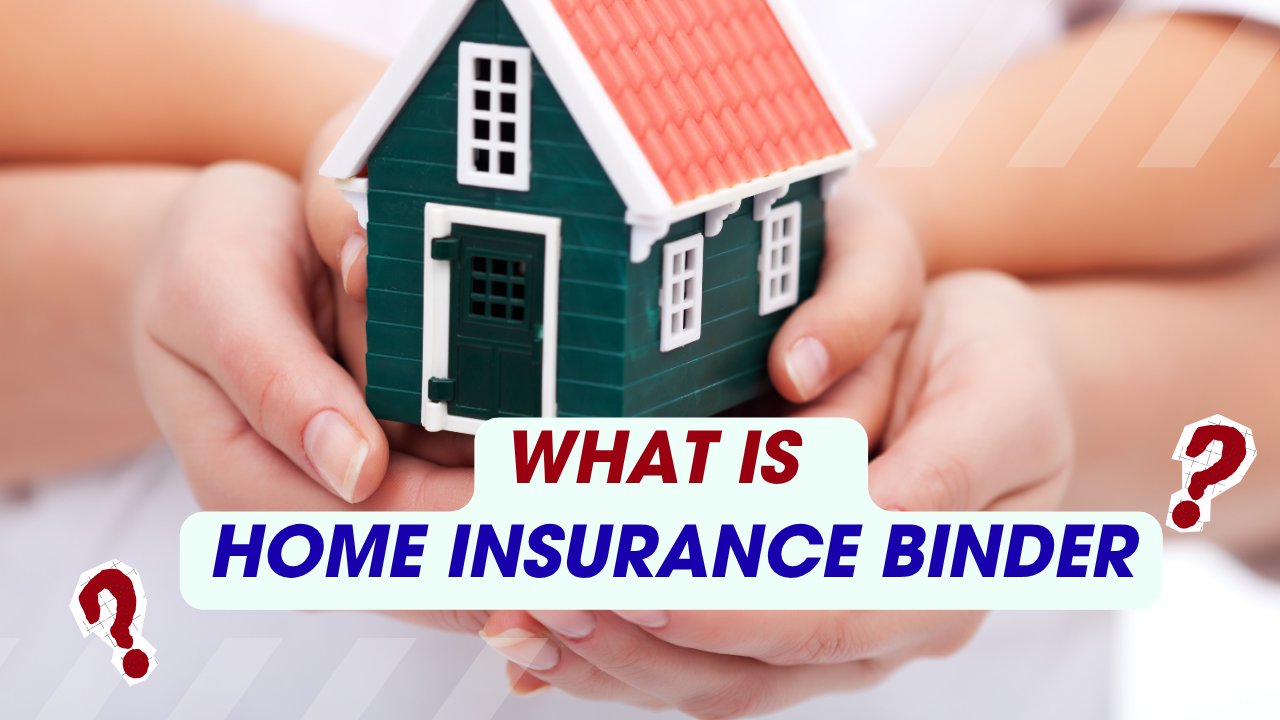

Home Insurance Binder - Everything You Need to Know Before Closing on Your Home
You are days away from closing on your new home. Your lender sends you an email asking for a "home insurance binder" before they release the funds.
You have never heard this term before.
You are not sure what it is, who gives it to you, or how fast you need to get it.
This guide answers all of that — simply, clearly
What Is a Home Insurance Binder?
A home insurance binder is a temporary document that proves you have home insurance.
That is the simple version.
Here is a little more detail. When you buy a home insurance policy, the full official policy document takes a few days or even weeks to be prepared and sent to you. But your mortgage lender needs proof of insurance before they will let the home purchase go through.
So your insurance company gives you a binder — a short, temporary document that says "yes, this person has insurance, it starts on this date, and here are the basic details."
It is not your full policy. It is a placeholder that holds everything together while your full policy is being processed.
Think of it like this: A binder is like a receipt you get at a restaurant before the full bill arrives. It confirms something real is happening, even though the final paperwork is not ready yet.
Why Is It Called a Binder?
The word comes from the idea of "binding" — as in, the insurance company is binding itself to a legal agreement with you.
By issuing a binder, the insurer is saying: "We agree to cover you. This is legally valid right now, even before the full policy is printed."
So yes — a binder is a real, legally binding document. It is not just a placeholder with no value. If something happened to your home the day after you received your binder, your coverage would still apply.
Who Needs a Home Insurance Binder?
Not everyone needs one — but most homebuyers do.
You will almost certainly need a binder if:
- You are buying a home with a mortgage
- Your lender has asked for proof of insurance before closing
- You are refinancing your existing home loan
- You are purchasing investment property with a loan
You may not need one if:
- You are buying a home outright with cash (no lender involved)
- Your existing policy is already active and covers the new property
- Your insurer sends the full policy very quickly
In most home purchases, the lender is the one asking for the binder. They want to know their investment — your home — is protected from day one.
What Does a Home Insurance Binder Include?
A binder is a short document, usually one to three pages. But it contains the most important information from your policy.
Here is what you will typically see on it:
Your Personal Details
Your full name and the address of the property being insured.
Policy Number
A temporary number that identifies your coverage while the full policy is prepared.
Insurance Company Details
The name, address, and contact information of your insurer.
Coverage Start and End Date
The binder is temporary — usually valid for 30 to 90 days. The start date is typically the day of closing.
Type of Coverage
What is actually covered — for example, the structure of your home, your personal belongings, liability coverage, and so on.
Coverage Amounts
How much the insurance company will pay for each type of coverage. For example, $250,000/£250,000 for the home or dwelling, and $100,000/£100,000 for personal belongings or property.
Deductible Amount
The amount you agree to pay out of your own pocket before insurance kicks in.
Mortgagee Clause
This is important. This section names your lender as an additional interested party. It tells the insurer that if a claim is paid out, the lender also has a financial interest. Lenders require this.
Premium Information
How much you are paying for the policy and how often.
How Long Is a Home Insurance Binder Valid?
A binder is temporary by design. It is not meant to last forever.
Most home insurance binders are valid for 30 to 90 days, depending on the insurer.
Within that window, your full policy should arrive. Once your full policy is active, the binder is no longer needed — it is automatically replaced.
If for some reason your full policy is delayed beyond the binder's expiry date, contact your insurer immediately to request an extension. You do not want a gap in coverage, even for a single day — especially if your mortgage lender finds out.
How Do You Get a Home Insurance Binder?
Getting a binder is straightforward. Here is how it works step by step.
Step 1 — Shop for Home Insurance Early
Do not wait until the week of closing to sort out your insurance. Start shopping at least two to three weeks before your closing date. This gives you time to compare quotes and ask questions.
Step 2 — Choose a Policy and Pay Your First Premium
Once you have selected a policy, you will pay your first premium (or set up the payment). This activates the coverage.
Step 3 — Request the Binder
Ask your insurance agent or company to send you the binder. In most cases, they will email it to you within a few hours or the same day. Some insurers send it automatically as soon as the policy is confirmed.
Step 4 — Send It to Your Lender
Forward the binder to your mortgage lender or closing agent. They need it on file before closing can happen.
Step 5 — Keep a Copy for Yourself
Save a copy somewhere you can find it easily — your email, a folder on your computer, or a printed copy in a safe place.
That is all there is to it. The whole process can be done in a single day if needed.
Home Insurance Binder vs. Certificate of Insurance — What Is the Difference?
These two documents sound similar but they are used in different situations.
| Home Insurance Binder | Certificate of Insurance | |
|---|---|---|
| What it is | Temporary proof of home insurance | Summary of an existing active policy |
| When it is used | During a home purchase, before the full policy is ready | To prove ongoing coverage to a third party |
| How long it lasts | 30 to 90 days | As long as the policy is active |
| Who asks for it | Mortgage lenders at closing | Landlords, contractors, businesses |
| Is it legally binding? | Yes | Yes |
In short, a binder is used at the start — when your policy is brand new. A certificate of insurance is used later — to prove an existing policy is still in force.
Home Insurance Binder vs. Dec Page — What Is the Difference?
You may also hear the term "dec page" — short for declarations page. Here is how it differs from a binder.
A declarations page is part of your full, official policy. It summarises the key details — your name, property address, coverage amounts, premium, and policy period.
A binder comes first, before the full policy is ready. The dec page comes later, as part of the full policy document.
Once you receive your dec page, your binder has done its job and is no longer relevant.
| Binder | Declarations Page (Dec Page) | |
|---|---|---|
| When you get it | Immediately, at purchase | When full policy is issued |
| Is it temporary? | Yes, 30–90 days | No, lasts the policy term |
| Part of the full policy? | No | Yes |
| Used for closing? | Yes | Sometimes accepted after closing |
What Happens If You Do Not Have a Binder at Closing?
This is where things can get stressful.
If you cannot provide proof of insurance — including a binder — before or at closing, your lender will likely delay the closing. They will not release mortgage funds until they know their investment is covered.
This can push back your moving date, cause problems with the seller, and create a lot of unnecessary stress.
The good news is that this is entirely avoidable. Simply arrange your home insurance at least a week before closing and request the binder as soon as your policy is confirmed.
Do not leave it to the last minute.
Common Questions About Home Insurance Binders
How Quickly Can I Get a Home Insurance Binder?
In most cases, very quickly. If you buy a policy online or over the phone and pay your first premium, your insurer can usually email a binder the same day — sometimes within hours.
Does a Binder Mean I Am Fully Covered?
Yes. A binder is legally valid. If something happened to your home while your binder was active, your insurer would be obligated to honour the coverage. That said, get your full policy as soon as possible so you have all the details in writing.
Can My Lender Reject My Binder?
Technically, yes — if it is missing required information. The most common reason lenders reject binders is a missing or incorrect mortgagee clause (the section that names the lender). Make sure your insurer has your lender's exact legal name and address.
Is a Binder the Same as a Policy?
No. A binder is temporary and limited. Your full policy is a detailed legal document that outlines everything — exclusions, claim procedures, definitions, and more. The binder covers you in the short term while your full policy is prepared.
Can I Get a Binder Before I Have Chosen a Closing Date?
Yes, but it is best to wait until you are close to finalising your closing date. Since most binders only last 30 to 90 days, you do not want it to expire before you actually close.
Does a Binder Cost Anything?
No. The binder itself is free. You do pay for the insurance policy, but the binder is simply a document that confirms your coverage — it does not cost extra.
What If I Change Insurers Before Closing?
If you switch insurers before closing, you will need a new binder from your new insurer. Make sure to cancel the old policy properly and send your lender the updated binder before closing day.
Tips for Getting Your Binder Right the First Time
Getting a binder is easy — but small mistakes can cause big delays. Here is how to avoid them.
Start Early
Do not wait until two days before closing. Start shopping for home insurance as soon as you have a closing date confirmed — ideally two to three weeks before.
Give Your Insurer Accurate Information
The address, your name, and the coverage details on the binder must exactly match what your lender has on file. Even a small spelling difference can cause problems.
Get Your Lender's Exact Mortgagee Information
Ask your lender for their exact legal name, address, and loan number. Give this to your insurer so the mortgagee clause is correct on the first attempt.
Ask for Email Delivery
Get your binder sent by email so you can forward it to your lender quickly. No need to wait for post.
Confirm Your Lender Has Received It
Do not assume the binder has been received and accepted. Follow up with your lender or closing agent to confirm everything is in order.
Keep a Copy
Store a digital and physical copy of your binder somewhere safe. Your family should know where to find it.
The Short Version — What You Need to Remember
If you take nothing else from this guide, remember these five things:
- A home insurance binder is temporary proof that your insurance policy is active
- Your mortgage lender requires it before closing on your home
- It is valid for 30 to 90 days, after which your full policy takes over
- You get it from your insurance company — usually the same day you buy your policy
- Make sure it includes the correct mortgagee clause with your lender's details
Arranging a home insurance binder is one of the smaller tasks in the home buying process — but it is one that can hold up everything if you leave it too late.
Sort it early, send it promptly, and you will have one less thing to worry about on closing day.
Quick Glossary — Words You Might See
Binder
A temporary document proving your home insurance is active.
Premium
The amount you pay for your insurance policy, usually monthly or annually.
Deductible
The amount you pay out of pocket before your insurance covers the rest.
Mortgagee Clause
The section of your binder that names your lender as an interested party.
Declarations Page (Dec Page)
A summary page in your full policy that lists your coverage details.
Closing
The final step in buying a home, where ownership is legally transferred to you.
Probate
A legal process that can delay the transfer of assets — avoided with proper beneficiary naming (relevant to life insurance, not home insurance, but often confused).
Dwelling Coverage
The part of your home insurance that covers the physical structure of your house.
❓ Frequently Asked Questions
How quickly can I get a home insurance binder?
Does a binder mean I am fully covered?
Can my lender reject my binder?
Is a binder the same as a policy?
Can I get a binder before I have chosen a closing date?
Does a binder cost anything?
What if I change insurers before closing?
Related Articles

What Is a Business Owners Policy (BOP) and Who Needs It?
Learn what a Business Owners Policy (BOP) covers, who needs it, how much it costs, and why it is essential…
Life Insurance Beneficiary Rules You Must Know
Learn what a life insurance beneficiary is, who you can name, common mistakes to avoid, and how to choose the…
Key Person Insurance for Small Businesses: A Simple Guide
Learn what Key Person Insurance is, how it works, and why small businesses use it to protect against the loss…