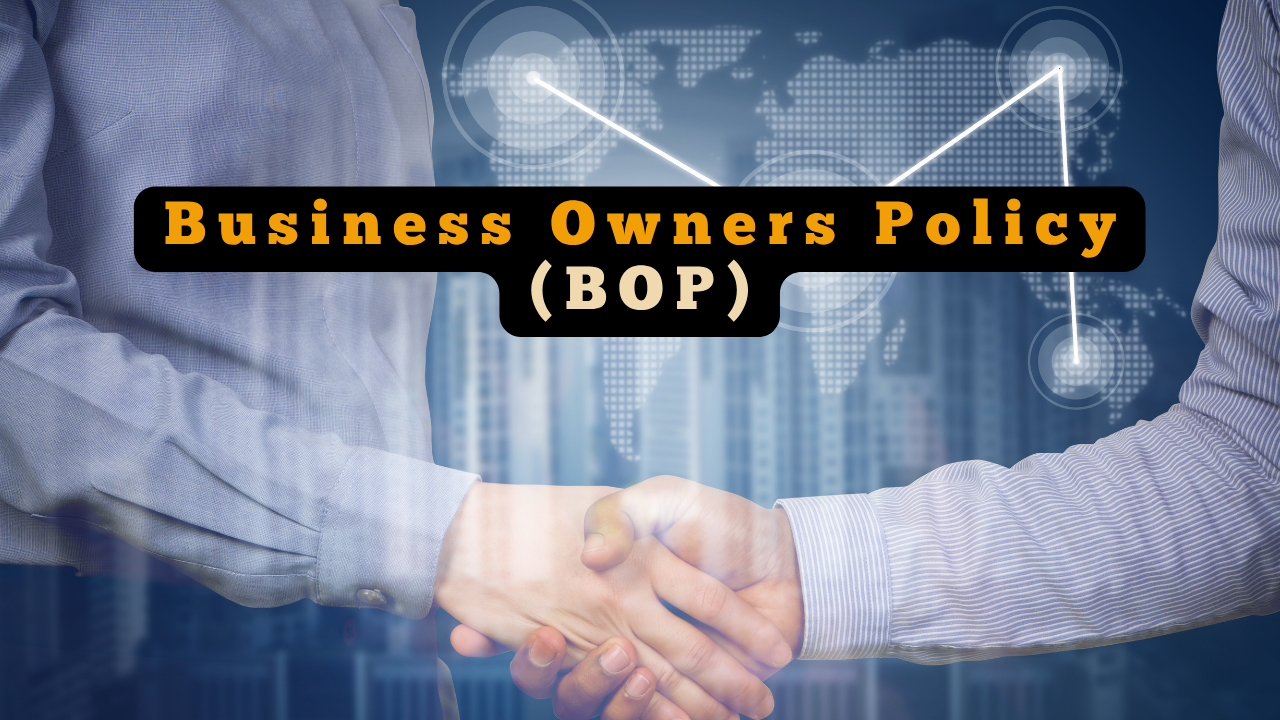

What Is a Business Owners Policy (BOP) and Who Needs It?
You started your business. You are working hard, serving customers, and building something real.
Then someone mentions you need a "BOP" for your business.
You nod along — but inside you are wondering what on earth a BOP actually is, whether you really need one, and how much it is going to cost you.
This guide answers all of that. No insurance jargon. No confusing fine print. Just clear, simple answers that help you make a smart decision for your business.
What Is a Business Owners Policy (BOP)?
A Business Owners Policy — commonly called a BOP — is a single insurance package that bundles together the most important types of business insurance into one plan.
Instead of buying three or four separate insurance policies and managing them all individually, a BOP wraps the most essential coverage into one neat package — usually at a lower price than buying each one separately.
Think of it like a combo meal at a restaurant. Instead of ordering your burger, fries, and drink separately — and paying more for each — you get everything bundled together for one price. A BOP works the same way for your business insurance.
In simple terms: A BOP = the essential insurance your small business needs, bundled into one affordable policy.
What Does a BOP Cover?
A standard BOP includes three main types of coverage. Here is what each one means in plain English.
1. General Liability Insurance
This covers you if someone blames your business for causing them harm.
For example:
- A customer slips and falls in your shop and sues you
- You accidentally damage a client's property while working at their home
- Someone claims your product caused them an injury
- A client says your advice cost them money and takes you to court
General liability covers the legal costs, compensation payments, and settlement fees that come from these kinds of situations. Without it, even a single lawsuit could wipe out everything you have built.
2. Commercial Property Insurance
This covers the physical things your business owns or uses.
For example:
- Your office or shop is damaged in a fire
- A burst pipe floods your workspace and ruins your equipment
- Someone breaks in and steals your computers or tools
- A storm damages your building or signage
It does not matter if you own the building or rent it. If your business equipment, furniture, stock, or workspace is damaged or destroyed, commercial property insurance helps you recover and get back to work.
3. Business Interruption Insurance
This is the coverage most business owners forget about — and the one that can save everything when disaster strikes.
Here is the problem it solves. Imagine a fire damages your shop. Your property insurance covers the cost of repairs. But while your shop is being fixed — which could take weeks or months — you are not making any money. Your bills still arrive. Your rent or mortgage is still due. Your staff still need to be paid.
Business interruption insurance covers your lost income during that period. It keeps your business financially alive while you get back on your feet.
Think of it this way:
| Coverage | What It Protects |
|---|---|
| General Liability | Protects you if someone sues your business |
| Commercial Property | Protects your physical assets and workspace |
| Business Interruption | Protects your income if you cannot operate |
All three come bundled together in a standard BOP.
What Is Not Covered by a BOP?
A BOP covers a lot — but it does not cover everything. Here is what you will not find in a standard policy.
- Professional liability (errors and omissions). If a client claims your professional advice or service caused them financial loss, a BOP will not cover that.
- Workers compensation. If one of your employees gets injured on the job, a BOP does not cover their medical bills or lost wages.
- Commercial auto insurance. If you or your staff drive vehicles for business purposes, those vehicles are not covered by a BOP.
- Health insurance for employees. A BOP does not cover employee health benefits.
- Cyber liability. If your business suffers a data breach or gets hit by a cyberattack, a standard BOP will not cover the costs.
- Flood and earthquake damage. Standard property coverage in a BOP usually excludes natural disasters like floods and earthquakes.
Who Needs a Business Owners Policy?
A BOP is designed specifically for small to medium-sized businesses. It is not for large corporations — they have different, more complex insurance needs.
You are likely a good fit for a BOP if:
- You have a physical location — an office, shop, studio, or warehouse
- You have fewer than 100 employees
- Your annual revenue is under a certain threshold
- Your business operates in a low to moderate risk industry
- You interact with customers or clients in person
- You own business equipment, stock, or furniture worth protecting
Here are some common types of businesses that typically benefit from a BOP:
- Retail shops and boutiques
- Restaurants and cafes
- Hair salons and beauty studios
- Photographers and videographers
- Small contractors and tradespeople
- Accountants and bookkeepers
- Graphic designers and marketing consultants
- Real estate agents
- Landlords who own small commercial properties
- Small medical or dental offices
- Cleaning companies and maintenance businesses
- Tutors and coaching businesses
If you run any kind of small business that has a physical presence, serves customers, or owns equipment — there is a very good chance a BOP is right for you.
Who Does Not Need a BOP?
Not every business is a good fit. A BOP may not be suitable if:
- Your business is very large with complex operations
- You work in a high-risk industry like construction, manufacturing, or aviation
- You are a freelancer who works entirely online with no physical assets
- Your business has very specific or unusual insurance needs that a standard BOP cannot cover
In these cases, an insurance professional can help you build a custom policy that fits your situation.
How Much Does a Business Owners Policy Cost?
This is the question everyone wants answered — and the honest answer is that it depends.
Several factors affect the price of a BOP:
- Your industry
- Your location
- The size of your business
- Your coverage limits
- Your claims history
General ballpark figures: Many small businesses pay anywhere from a few hundred to a few thousand dollars or pounds per year for a BOP.
The best way to find out what you will pay is to get quotes from multiple insurers and compare them side by side.
BOP vs. General Liability Insurance — What Is the Difference?
General liability insurance is just one piece of a BOP. When you buy a BOP, general liability is included — along with property and business interruption coverage.
| General Liability Only | Business Owners Policy (BOP) | |
|---|---|---|
| Covers lawsuits and injury claims | Yes | Yes |
| Covers your property and equipment | No | Yes |
| Covers lost income during downtime | No | Yes |
| Cost | Lower | Slightly higher but better value |
| Best for | Very small or home-based businesses | Most small to medium businesses |
BOP vs. Commercial Package Policy — What Is the Difference?
A BOP is a pre-packaged set of coverages designed for small businesses.
A commercial package policy is more flexible and more customisable.
If you run a straightforward small business — a BOP is almost certainly what you need.
How to Get a Business Owners Policy — Step by Step
Step 1 — Understand what your business actually needs
Before you speak to anyone, take stock of your situation.
Step 2 — Gather basic information about your business
Insurers will ask for your business name, address, number of employees, annual revenue, type of business, and claims history.
Step 3 — Get quotes from multiple insurers
Do not go with the first quote you receive.
Step 4 — Read what is included and what is excluded
Make sure you understand exactly what the policy covers and what it does not.
Step 5 — Ask about add-ons
Find out whether you can add extra coverage to your BOP.
Step 6 — Buy the policy and keep a record
Once you choose a policy, buy it and make sure you receive your policy documents.
Can You Customise a BOP?
Yes — and this is one of the best things about it.
Common BOP add-ons include:
- Professional liability
- Cyber liability
- Equipment breakdown
- Hired and non-owned auto
- Employee dishonesty
- Outdoor signs
Common Mistakes Business Owners Make With a BOP
- Buying the cheapest policy without reading it
- Assuming a BOP covers everything
- Not updating the policy as the business grows
- Underestimating the value of their property
- Waiting until something goes wrong
Real-World Examples of a BOP in Action
Example 1 — The café owner
Sarah runs a small café. A customer trips on a loose floor tile, breaks their wrist, and sues her for medical costs and lost wages.
Example 2 — The photographer
James is a freelance photographer with an office and thousands of pounds worth of camera equipment.
Example 3 — The boutique owner
Maria owns a small clothing boutique. A pipe bursts and floods her entire shop.
The Short Version — What You Need to Remember
- A BOP bundles general liability, commercial property, and business interruption insurance into one affordable package
- It is designed for small to medium-sized businesses with a physical location and moderate risk
- It does not cover everything
- It is almost always better value than buying each coverage separately
- You can customise it with add-ons
- Get quotes from multiple insurers and review your policy every year
A BOP will not solve every problem your business might face. But it will protect you from the most common and most damaging ones.
Quick Glossary — Words You Might Come Across
- BOP — Business Owners Policy.
- General liability — Coverage that protects your business if someone sues you.
- Commercial property — Coverage for your physical business assets.
- Business interruption — Coverage for lost income when your business cannot operate.
- Premium — The amount you pay for your insurance.
- Deductible (or excess) — The amount you pay out of pocket before insurance covers the rest.
- Endorsement — An add-on that extends or adjusts your coverage.
- Professional liability — Coverage for professional mistakes or advice-related claims.
- Workers compensation — Insurance that covers employees injured on the job.
- Exclusion — Something your policy specifically does not cover.
❓ Frequently Asked Questions
Is a BOP required by law?
Can a sole trader or freelancer get a BOP?
How quickly can I get a BOP?
Can I cancel my BOP if I close my business?
Does a BOP cover remote or home-based employees?
What is the difference between a BOP and business insurance?
Related Articles
Home Insurance Binder: What Buyers Must Know
A simple guide explaining what a home insurance binder is, why lenders require it, how long it lasts, and how…
Life Insurance Beneficiary Rules You Must Know
Learn what a life insurance beneficiary is, who you can name, common mistakes to avoid, and how to choose the…
Key Person Insurance for Small Businesses: A Simple Guide
Learn what Key Person Insurance is, how it works, and why small businesses use it to protect against the loss…